Dryer vent guide
The difference between the lint filter and the vent, the signs people notice, and the limits of the service.
What is the difference between the lint filter and the dryer vent?
The lint filter is the screen you pull out and clean, ideally with every load. It catches much of the lint that comes off clothing, but not all of it. The rest is carried by warm, moist air out of the back of the dryer, through a short connector, along the vent duct inside the wall, floor, ceiling or attic, and finally out through a hood or cap on the outside of the house.
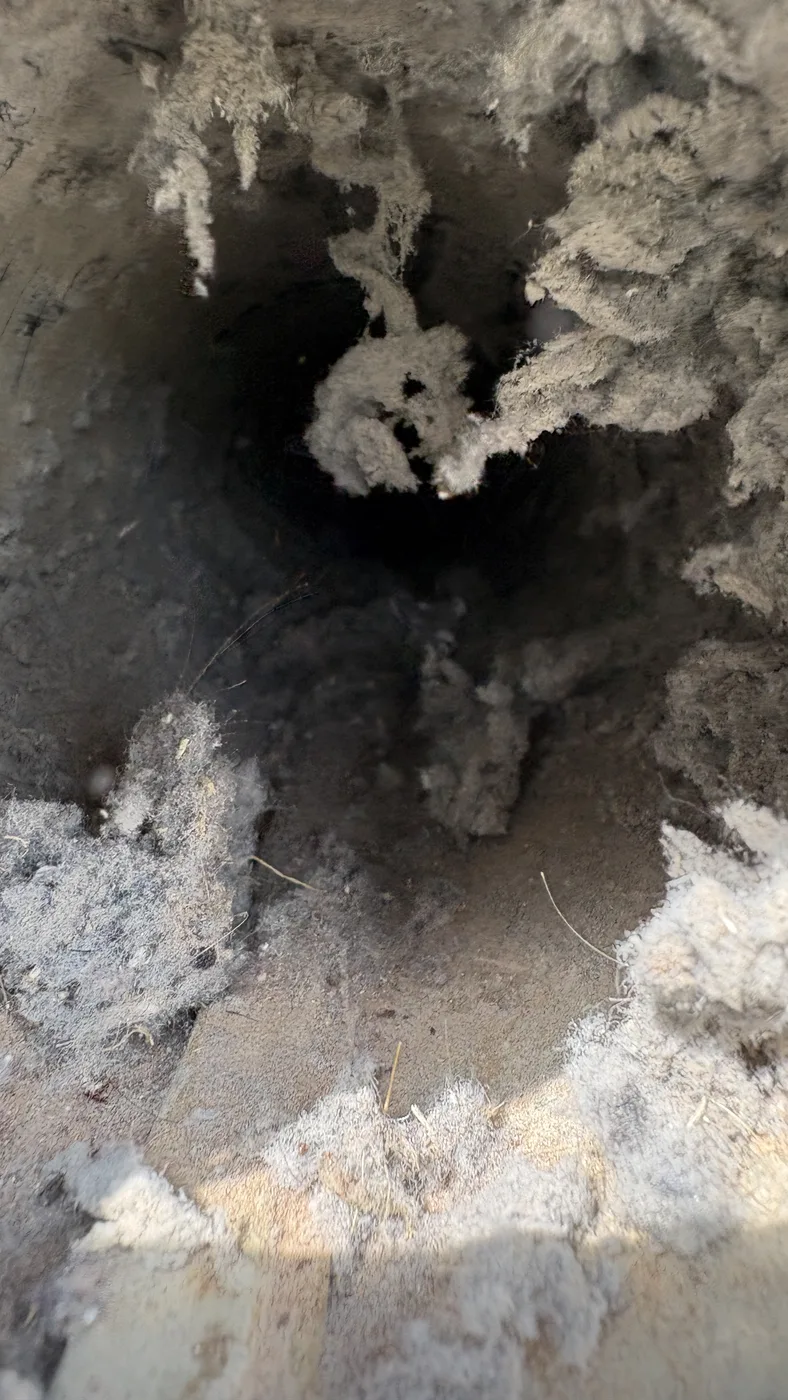
Lint that gets past the filter can collect along that route over time, especially at bends, joints and the exterior opening. Dryer vent cleaning is about that exhaust pathway, not the lint filter. A clean filter is still important, but it says nothing about the condition of the duct beyond it.
Why does lint build up in the first place?
Lint is made of tiny fibers that break off fabric as it tumbles. Towels, fleece, bedding and new clothes tend to shed more than other loads. The exhaust carries those fibers out, and wherever the air slows down, at a bend, a sagging section, a joint or a sticking exterior flap, some of them settle. Moisture in the air helps lint cling, so a layer builds up gradually.
Lint is also combustible, which is one reason dryer manuals are so firm about cleaning the filter. Birds and small animals sometimes nest in exterior openings that lack a working flap or cover, adding material that blocks the exit.
What are common signs a dryer vent may need attention?
People often notice clothes taking longer than usual to dry, a dryer or laundry room that feels hotter than normal, lint gathering around the exterior opening, or a vent flap that barely moves while the dryer runs. Some dryers also show a warning about restricted airflow.
None of these proves the vent is the cause. Overloading, a worn heating element, a faulty sensor, a gas supply problem in a gas dryer or a crushed connector behind the machine can produce similar symptoms. If you notice a burning smell, see smoke or the dryer shuts off from overheating, stop using it and have it checked by a qualified professional before running it again.
Why does a long or complicated vent route matter?
Every turn and every extra foot of duct makes it harder for air to push lint outside. A dryer against an exterior wall may vent through a short, nearly straight run. A dryer in an interior laundry room, a hallway closet or an upstairs space may vent through a long run with several bends that ends at the roof, under the eaves or on a wall across the house.
The connector behind the dryer matters too. Flexible foil and plastic connectors can be crushed when a dryer is pushed back against the wall, and kinks restrict airflow. Many dryer manufacturers specify the type and maximum length of duct their machine should use, and the dryer's installation instructions are the place to check.
Are some parts of a vent hard to reach?
Sometimes. A duct that runs inside finished walls or ceilings can only be reached through its openings. Roof exits, high wall exits, stacked laundry units, tight closets and crawl spaces can all limit access, and a duct that is damaged, disconnected or poorly joined inside a wall cannot be seen from either end.
If you do not know where your vent exits or how it is routed, say so. Please do not climb onto a roof or take ductwork apart to find out.
Is repair or installation part of vent cleaning?
Cleaning a vent and repairing or installing one are different kinds of work. Replacing damaged ducts, rerouting a vent, fitting a new exterior hood and anything involving gas lines or electrical connections are repair and installation tasks, which can call for an appliance technician, a contractor or a licensed gas professional. Do not assume any of them is part of a dryer vent cleaning, and confirm the scope before booking if your vent may need more than cleaning.
Vent cleaning is also different from diagnosing or repairing the appliance, and a clean vent will not fix a dryer with a mechanical or electrical fault. If drying problems continue after the vent is cleaned, the dryer itself may need attention from an appliance repair service.
What can I safely do between cleanings?
Clean the lint filter with every load, as most dryer manuals recommend. Some manuals also suggest washing the filter screen now and then, because dryer sheets can leave a film that blocks airflow even when the screen looks clear. Follow your own dryer's manual for how to do this.
Keep the area around the dryer clear of laundry piles, boxes and cleaning products. From the ground, you can check whether the exterior flap opens while the dryer runs and whether lint, leaves or nesting material show around the opening. Avoid overloading the drum, and leave moving a gas dryer, disconnecting ducts or anything on a roof to a professional.
How often should a dryer vent be cleaned?
It depends on how much laundry the household does, the length of the vent route and the dryer itself. Large households, homes that dry a lot of towels or pet bedding, and long or winding vent runs usually need attention sooner. Your dryer manufacturer's guidance is a good reference, and any of the warning signs above is a reason to check sooner.
How can I prepare for a dryer vent visit?
Clear a path to the dryer and the laundry area, and empty the drum and the lint filter beforehand. It helps to know whether the dryer is gas or electric, whether it is stacked or in a closet, and where the outside exit is, if you can see it from the ground.