Tile and grout guide
Why grout darkens, how tile types differ, and what cleaning can and cannot do for a floor.
Why does grout get dirty faster than tile?
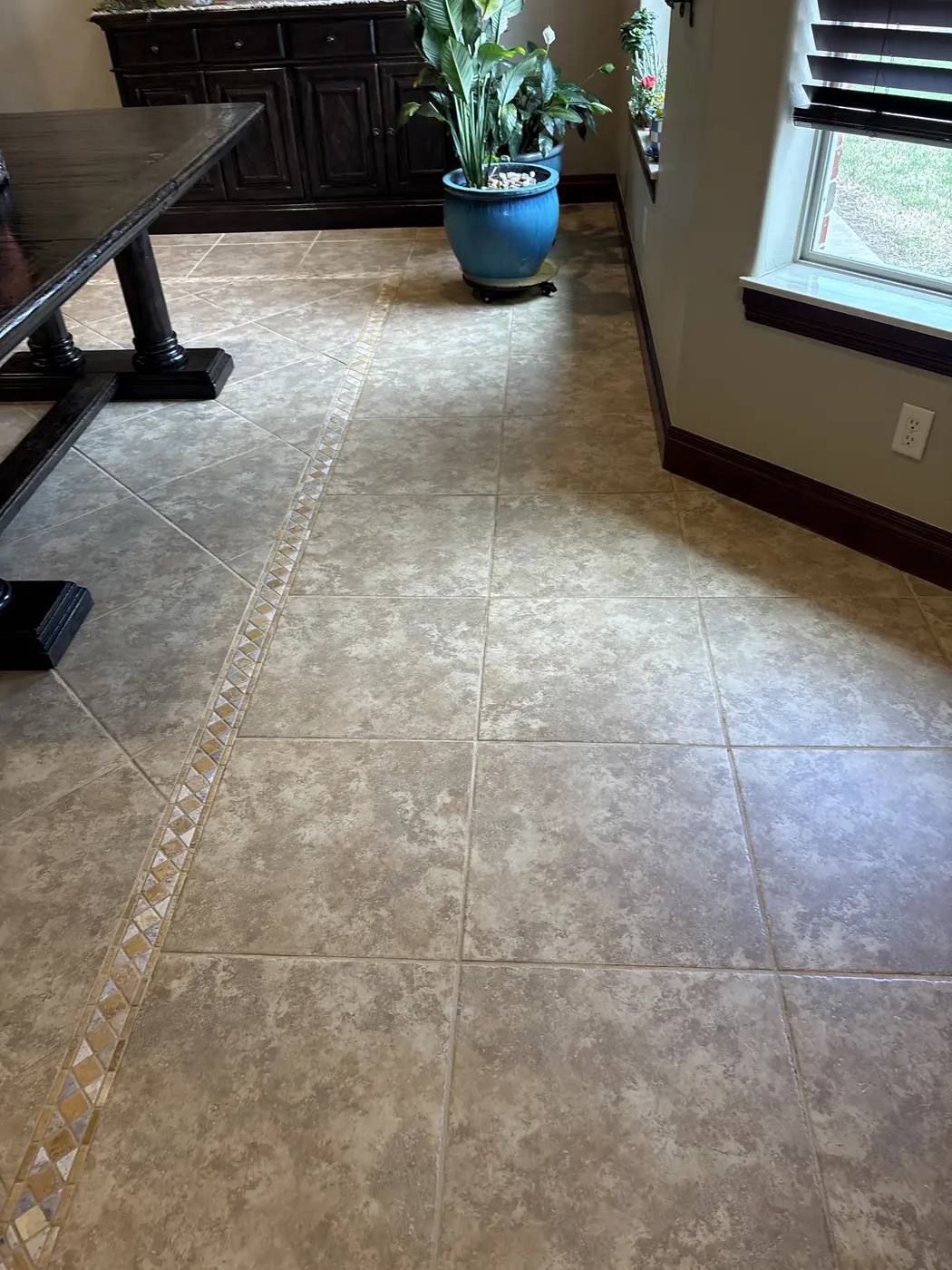
Most floor tile has a hard, smooth face. Glazed ceramic and porcelain shed liquid and soil fairly well, so a spill usually sits on top until it is wiped away. Grout is different. Standard cement-based grout is porous and slightly rough, and the joints sit a little lower than the tile surface. Mop water, soil and spills run into those channels and settle there.
That is why grout lines often look darker than the tiles around them, especially in kitchens, entryways and bathrooms. Dirty mop water is a common cause: as it is spread across the floor, the soil it carries ends up in the joints. Rinsing the mop and changing the water often during routine cleaning can slow this down.
Does the kind of tile matter?
Yes, and it is one of the most useful things to know before any cleaning. Glazed ceramic and porcelain are common in homes and generally tolerate routine cleaning well. Natural stone, such as marble, travertine, limestone and slate, needs more care. Many stones react with acidic products, including vinegar and some bathroom cleaners, which can etch or dull the surface, and some stones scratch easily.
Unglazed tile, such as some quarry or terracotta tile, can be more absorbent than glazed tile and may behave more like grout. The installer's paperwork or the product name, if you have either, can identify the material. If you are not sure, it is better to describe the floor as it looks, glossy or matte, large or small tiles, than to guess at what it is made of.
What can tile and grout cleaning not fix?
Cleaning addresses soil and buildup on the surface and in the grout joints. It does not repair a floor. Cracked or chipped tiles, tiles that sound hollow or move underfoot, grout that is crumbling, cracked or missing, and gaps along walls or tubs are installation and repair issues, and they stay the same after cleaning.
Some discoloration is not dirt either. Grout can be stained by dyes, rust or old sealer that has yellowed, and grout lines are sometimes slightly different colors from the start because of how the grout was mixed and installed. Our listed service is tile and grout cleaning. Regrouting, tile replacement, sealing and grout color treatments are not listed among our services, so do not assume they are part of a cleaning.
What about sealing grout?
Grout sealer is a separate product that some homeowners apply after installation, or after a deep cleaning, to slow down how quickly grout absorbs spills. Whether it suits your floor depends on the grout, the tile and the room. Some grouts, including many epoxy grouts, are not normally sealed at all.
If you are thinking about sealing, read the instructions from your tile or grout manufacturer, or ask the person who installed the floor. A sealer needs a clean, completely dry surface, and products vary in how often they need to be reapplied. Sealing is not a substitute for regular cleaning, and it does not hide damage.
How should I care for tile floors between cleanings?
Remove loose grit first. Sweeping, dust mopping or vacuuming on a hard-floor setting before you mop keeps sand from scratching the surface and out of the grout. Doormats at outside entrances catch a lot of that grit before it reaches the floor.
When you mop, use a cleaner your tile manufacturer recommends for the surface, mixed at the strength on the label. Stronger is not better: concentrated products and soap-heavy cleaners can leave a film that attracts soil. Avoid bleach, ammonia and acidic products on colored grout or stone unless the manufacturer says they are safe. Wipe up spills, especially coffee, wine, oil and anything with dye, before they soak into the grout.
Why does a floor look cloudy even after mopping?
A dull, hazy tile surface is often caused by residue rather than dirt. Too much cleaner, cleaner that is never rinsed away and some mop-and-shine products can build up a thin layer over time. That layer holds onto footprints and can make grout lines look dingy. New installations sometimes show a light haze left by the grout itself, which is a different issue from everyday soil.
If your floor has looked hazy for a long time, mention it along with the products you have been using. It is useful background, even though cleaning cannot promise that every surface will look the way it did when it was new.
Are kitchens and bathrooms different?
They often are. Kitchen floors pick up cooking grease, which can leave a sticky film on tile and trap soil in the grout near the stove, sink and refrigerator. Bathroom floors deal with moisture, soap residue and hair products, and grout near tubs and toilets can discolor. Entryways and laundry rooms usually collect the most outdoor soil. Grout along cabinet bases and appliance edges is often the hardest to reach with a mop, so it can look darker than the open floor.
We describe this service as tile floor and grout cleaning. If you are wondering about tiled showers, walls, countertops or backsplashes, ask before booking instead of assuming they are included.
What should I expect right after a cleaning?
Tile and grout may need time to dry, especially the grout joints, which hold moisture longer than the tile face. Before walking on the floor or returning rugs and furniture to it, check the guidance you were given for your particular floor. Keeping rugs off the area until it is dry stops moisture from being trapped underneath them.